

Whoa, check this out— I spent months poking around Solana explorers, trying to understand who really owns what on-chain. My first impression was excitement, then frustration, then a small ‘a-ha’ as patterns appeared. Initially I thought all explorers were roughly interchangeable, but after cross-checking transactions, token mint histories, and address clusters across different tools I realized that UX choices and indexing strategies lead to materially different conclusions about activity and risk. So this piece walks through the pragmatic differences between the Solana Explorer UI most users see, deeper analytics like Solscan offers, and how to actually use these tools without misreading the chain.
Really? Yep, true. A basic explorer shows transactions, blocks, and program logs with a clean timestamped feed. It tells you if a tx succeeded or failed, which accounts were touched, and how much SOL moved. But beyond the basic feed, explorers diverge: some index token metadata, some offer price charts, and others attempt to reconstruct on-chain relationships such as token distribution across holders and likely exchange-associated addresses. Those differences matter when you try to trace a rug pull, verify a bridge transfer, or audit liquidity movements for a token you just bought.
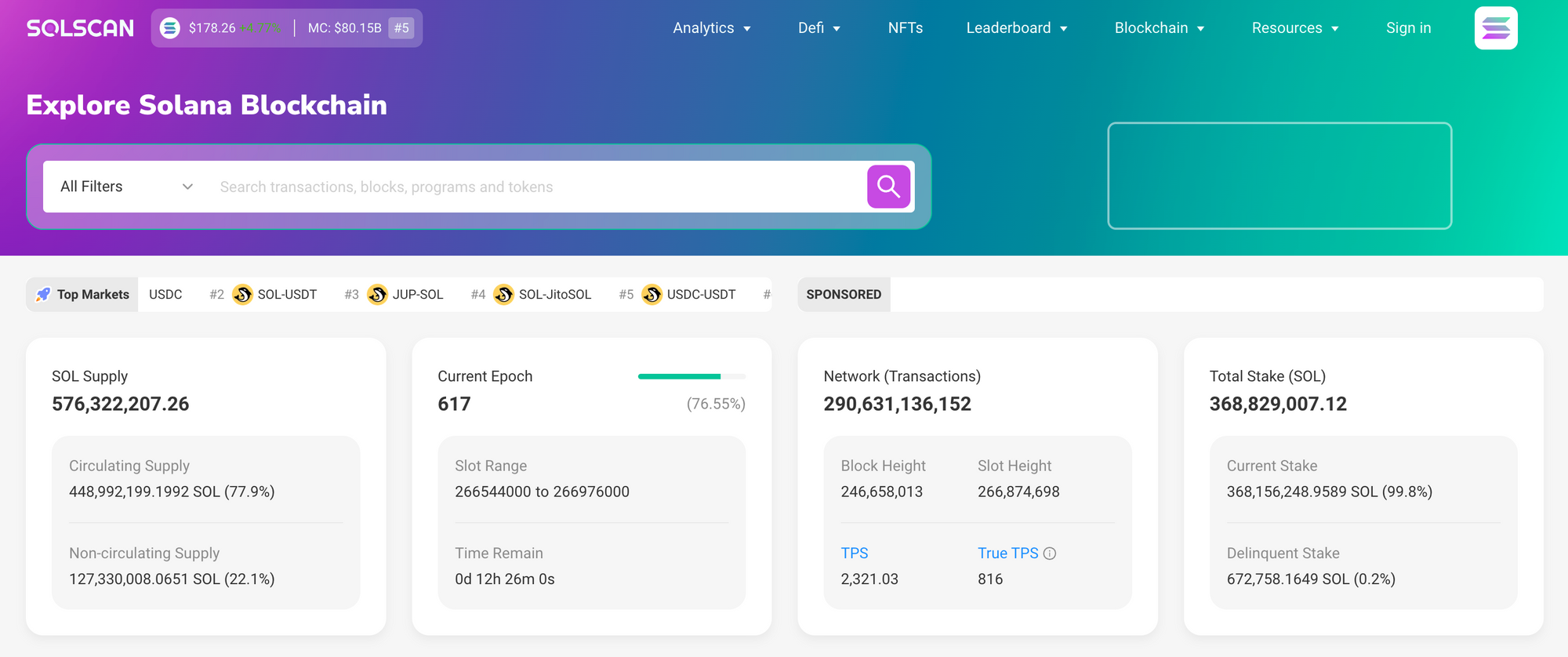
Okay, so check this out— Solscan is one of the more feature-rich analytics layers built on Solana’s public data. I’ve used it daily for dashboards, quick audits, and when I needed transaction decoding that other explorers obscure. If you want to chase token flows, inspect mint histories, or see historical holders over time, Solscan surfaces mint authority, freeze authority, and token transfer graphs alongside balances and parsed instruction data, which speeds investigations immensely. For reference and to poke around its interface yourself, I often point folks to the solscan explorer official site where you can search by address, transaction, token, or program and pull down the exact RPC call behind many UI items.
Hmm… that’s interesting. Data freshness and indexing vary by service and node infrastructure. That latency can trip you up if you’re trying to reconcile a token swap timing with on-chain oracle updates. Also, parsing decisions — how native instructions are decoded, the heuristics used to tag addresses as exchanges or contracts, or the decision to collapse internal transfers — change the narrative you read from the same bytes on-chain. So when numbers look off, dig into raw base58 transactions, cross-reference with logs, and don’t trust heuristics alone when you’re making financial or compliance calls.
Whoa, seriously folks. Most explorers expose APIs or an export feature, and their rate limits and response shapes matter for tooling. I’ve built scripts that pull token holder snapshots and had to page carefully to avoid throttling. If you’re building monitoring for a project, pick an explorer with a stable REST or GraphQL API, read the docs for pagination and error codes, and plan retries with exponential backoff rather than hammering RPC endpoints. Also, be mindful that some explorers offer webhooks or streaming options that save you from polling and that reduce eventual consistency headaches when near-real-time alerts are required.
Here’s what bugs me… GUI defaults can hide risk: token icons and summarized holder charts can lull you into trusting a project prematurely. A token with a pretty logo might still have a mint controlled by a single hot key. My instinct said ‘this is fine’ many times, yet when I inspected mint authority, vesting schedules, and the timing of large dumps across wallets the signal often contradicted the polished front-end narrative. Do the small checks: view the mint history, search for large transfers in off-hours, and look for clustered addresses that all participate in repeated pattern transfers rather than trusting aggregated APY-esque stats.
Seriously, check this. Not all explorers are equally audited or transparent about their indexing methods. Open-source indexing, clear changelogs, and transparency pages increase trust for me. If an explorer refuses to publish how it tags exchanges or how it reconstructs cross-program invocations, treat its high-level labels with skepticism and fall back to raw transaction inspection. And yes, cross-checking against a second explorer can reveal when heuristics differ and help you triangulate the truth rather than accepting a single narrative.
I’m biased, but for traders I use explorers to confirm bridge deposits and whether an incoming token is actually pegged. Compliance teams use holder distributions and cluster analysis to assess concentration risk and potential AML flags. I once debugged a payment pipeline where a token’s transfer memo field had been misused, and only by drilling into program logs and stake account changes did the root cause become clear. That one took patience, coffee, and multiple cross-references; it’s a reminder that blockchain transparency is powerful, but only if you know where to look and how to read the artifacts.
Hmm, caveat time. Explorer UIs focus on human readability and not on exhaustive forensic completeness. APIs may omit historical deltas or compress logs for storage efficiency, so always verify critical events. If you’re doing legal, auditing, or high-stakes trading work, pull raw RPC call traces, keep your own archival node where feasible, and validate sums against multiple sources to reduce single-point-of-failure risk. Also, remember that on-chain privacy tech and mixing patterns are evolving; heuristics can be broken, and your tooling must be maintained accordingly.
Okay, one last thought. Explorers are tools not oracles; they interpret and present chain data with assumptions baked in. Use multiple lenses, favor tools with transparent methodologies, and learn to read raw transactions. I’m not 100% sure about future directions — somethin’ tells me transaction visuals will get richer and clustering heuristics will improve, but regulatory and privacy pressures may force different trade-offs for how much attribution is shown publicly. If you want a practical next step, open the explorer, search an address you care about, and trace a handful of transactions until patterns emerge; that’s where the learning actually sticks.
Common questions about Solana explorers
How do I trust an explorer’s labels?
Compare labels across multiple explorers, inspect raw logs, and prefer services with published heuristics or open-source indexing; heuristics can be heuristics, not gospel.
Can I rely on explorer APIs for production alerts?
They are useful, but expect rate limits and occasional lag; for mission-critical flows, supplement with your own node or a paid streaming service.
Where should I start learning on-chain forensic skills?
Begin by decoding transactions in an explorer, read program docs (especially for token and staking programs), and practice reconstructing simple flows like swaps and bridge deposits.